
How to Combine Textured Pillows Without Overdoing It
Have you ever piled beautiful pillows onto a sofa, stood back, and thought — this looks like too much? You're not alone. Mixing textured throw pillows is one of the most rewarding parts of decorating, but it's also where things can go sideways fast. The good news: there's a simple logic behind every great pillow arrangement, and once you understand it, layering textures feels natural.
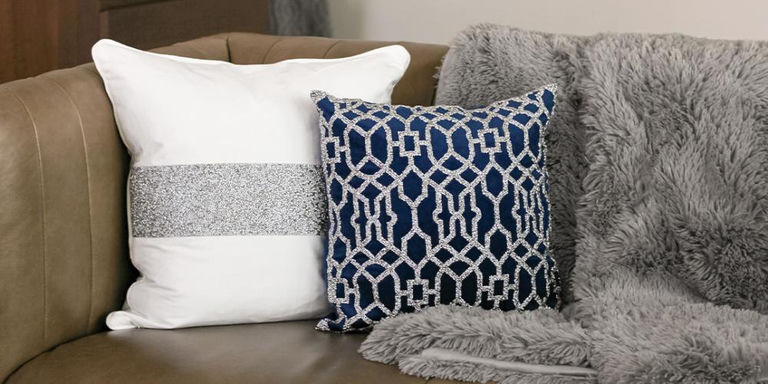
WHY TEXTURE MATTERS MORE THAN COLOR IN PILLOW STYLING
Most people focus on color when mixing pillows. But in our experience, texture does more of the heavy lifting. It's what gives a sofa personality. It's what makes a bed feel like a boutique hotel. Color creates mood; texture creates depth.
Think about what happens when light hits a velvet pillow next to a smooth linen one. The velvet absorbs light and looks plush and rich. The linen reflects it softly. That visual contrast is what makes the arrangement feel layered — not just coordinated.
THE TEXTURE RULE DESIGNERS SWEAR BY
Never use more than three distinct textures in one arrangement. One anchor texture (smooth or neutral), one mid-texture (like velvet or woven fabric), and one statement texture (like rhinestone embellishment or pearls) creates balance without chaos. This means your eye has enough variety to stay interested — but enough consistency to feel calm.
When all your pillows share the same surface — say, all velvet or all linen — the grouping reads as flat. Add one pillow with a raised, tactile quality and the whole arrangement comes alive. That's the power of contrast working for you.
HOW TO LAYER TEXTURED THROW PILLOWS WITHOUT OVERDOING IT
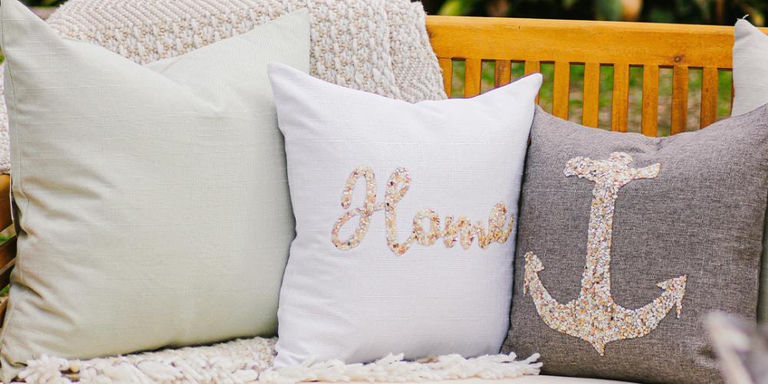
Layering pillows well is about sequence, not just selection. Here's how to build a cohesive arrangement from the back of the sofa forward.
BUILD YOUR LAYERS:
- Start with your largest pillow at the back
- Choose a smooth or neutral texture for the anchor
- Layer a mid-texture pillow in the middle
- Place your statement piece in front
- Keep odd numbers — three or five pillows look best
THE STATEMENT PIECE RULE:
Your front pillow is the one that earns all the attention. This is where you can afford to go bold — with rhinestone embellishment, faux pearls, or an intricate surface pattern. Keep it smaller in size, and let the back pillows stay quieter in texture so the statement piece doesn't compete. One show-stopper is always more elegant than three.
Scale matters just as much as texture. Large pillows in the back give structure. Medium pillows in the middle add fullness. A smaller, detailed pillow placed in front draws the eye in. This front-to-back progression is what separates a designed arrangement from one that just looks stuffed.
The best pillow arrangements tell a story — from soft and subtle at the back to rich and detailed at the front.
MIXING VELVET, EMBELLISHED, AND WOVEN PILLOWS THE RIGHT WAY
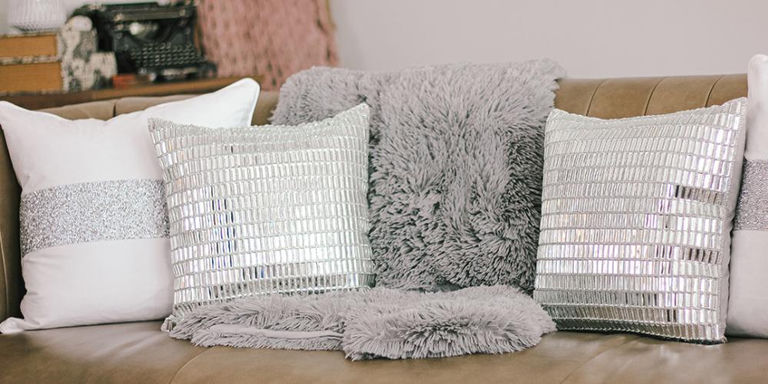
The three textures that work together best for a luxurious, layered look are velvet, embellishment, and woven or linen fabric. Each one plays a different role.
Here's how each texture contributes to the arrangement:
- Velvet: Rich and light-absorbing, it anchors the arrangement with quiet depth. Use it as your largest or middle pillow.
- Embellished (rhinestones or pearls): Reflects light and draws the eye. Works best as the statement piece at the front. Keep it to one per arrangement.
- Woven or linen: Adds organic contrast and breaks up the richness of velvet and embellishment. This is your "breath of air" pillow.
The Fifth Avenue Pillow is a strong example of embellishment done with restraint. Its glass rhinestone design sits on a velvet cover — so the surface texture and the sparkle work together rather than competing. Place it in front of a plain velvet anchor pillow and the difference is immediate. The Montaigne Pillow in Pearl or Stone takes a different approach: its cascading grid of faux pearls or glass stones adds tactile depth that reads as pattern and texture at once. Either one earns the front position in a layered arrangement.
QUICK CHECKLIST: IS YOUR ARRANGEMENT WORKING?
- No more than three different textures in one grouping
- Pillows are arranged from largest in back to smallest in front
- Only one embellished or highly detailed pillow per arrangement
- Colors share at least one common tone across all pillows
- There's clear contrast between at least two of the textures
COMMON MISTAKES WHEN MIXING DECORATIVE PILLOWS WITH TEXTURE
Even experienced decorators fall into a few predictable traps. Knowing what they are makes them easy to avoid.
TOO MANY STATEMENT PIECES
When every pillow is embellished or heavily detailed, the arrangement loses focus. The eye doesn't know where to land. Choose one statement pillow and let the others support it quietly. Think of it like jewelry — you don't wear every piece at once.
MATCHING TOO CLOSELY
Pillows in the exact same texture or the exact same pattern don't add depth — they just repeat. You want coordination, not uniformity. Two velvet pillows in slightly different shades of the same color read as intentional. Two identical pillows just look like a set.
IGNORING SCALE
Placing all your pillows in the same size creates a flat, uninteresting wall of fabric. Use at least two different sizes. A 24x24 pillow in the back with a 16x16 or 14x20 lumbar in front creates natural visual movement. This means the arrangement has a clear foreground and background — just like a well-composed photo.
INSIDER TIP: A REAL THREE-PILLOW PAIRING THAT WORKS
When mixing textures, use color to tie them together. Here's an arrangement using three distinct Sparkles Home pillows that share a cool neutral palette:
- Madison Avenue Pillow in Charcoal or Silver (20x20, back): The bold X-pattern in glass rhinestones on velvet anchors the arrangement with structure and depth.
- Montaigne Pillow in Stone (middle): The cascading grid of glass stones adds a softer, more organic sparkle — bridging the Madison's bold pattern and what's coming in front.
- Fifth Avenue Pillow in Silver (front): The allover rhinestone shimmer on velvet finishes the arrangement with quiet glamour — detailed enough to hold attention, refined enough not to overwhelm.
All three are velvet-based with glass rhinestones, so they coordinate naturally. But each has a distinct surface — X-pattern, cascading grid, allover shimmer — which is exactly what keeps the arrangement from looking repetitive.
Mixing textured pillows well comes down to a few simple principles: limit your textures, sequence your layers, and let one piece do the talking. Start with what you already have, then add a velvet anchor and one embellished statement piece and see how the arrangement shifts. In my experience, even one well-chosen addition — the cascading pearls of the Montaigne, the X-pattern shimmer of the Madison Avenue, the allover glow of the Fifth Avenue — transforms a plain sofa into something that feels truly considered.
Comments
Leave a Comment