
The History of Napkin Rings: Origins, Traditions, and Timeless Table Style
`Pick up a napkin ring and you're holding a small piece of dining history. Long before napkin rings became a way to dress up a table, they solved a much less glamorous problem: keeping track of whose napkin was whose between washes. That practical beginning grew into one of the most enduring traditions in table styling, and today's decorative napkin rings carry that legacy forward with a lot more sparkle.
WHERE NAPKIN RINGS CAME FROM
Napkin rings date back to 19th-century France, where households reused cloth napkins for several days between launderings. Each family member had a personal ring, often engraved with initials or a small design, so everyone could identify their own napkin at the table. This wasn't about decoration. It was about hygiene and practicality in a time before daily washing was the norm.
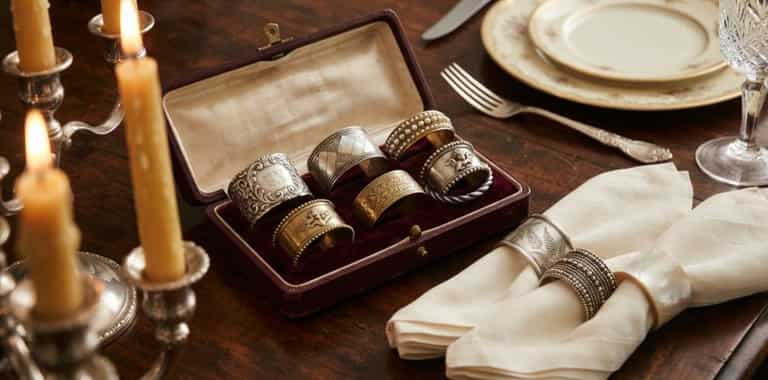
By the Victorian era, napkin rings had become a status symbol. Wealthier households commissioned silver, ivory, and mother-of-pearl designs, turning a utilitarian object into a showcase for craftsmanship. Families collected rings the way people collect jewelry today, with each piece reflecting personal taste and the household's standing.
In our experience helping people plan their table settings, most guests never think about this backstory. But knowing it adds a little weight to the tradition. You're not just accessorizing a napkin. You're continuing a custom that's over a century old.
THE SECRET TITLE
Victorian dining etiquette actually discouraged elaborate table decor beyond the essentials. Napkin rings survived that era's minimalism because they served a purpose. That practical root is part of why the tradition still feels timeless instead of trendy.
FROM PRACTICAL TOOL TO DECORATIVE PLACEMAT ACCESSORY
Daily laundering eventually became standard, and the original purpose of napkin rings faded. But instead of disappearing, they evolved. Designers saw an opportunity to turn a small, overlooked object into a focal point for the table. This means a napkin ring can now do double duty: it holds the napkin neatly and adds a burst of texture or shine to your place setting.
This shift mirrors what happened with other tableware. Charger plates started as practical protection for tablecloths and became decorative statements in their own right. Placemats followed a similar path. Small functional pieces, given room to shine, tend to become design opportunities.
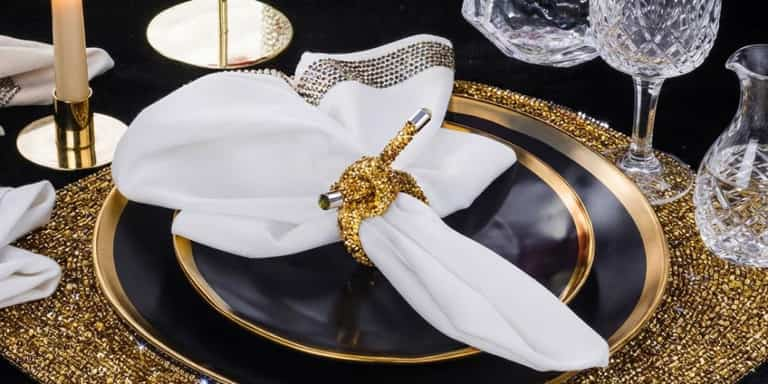
Modern rhinestone napkin rings, like the Luminous Knot Napkin Ring, reflect this evolution well. The knot design adds textural interest, while hundreds of multifaceted rhinestones catch light from every angle. It's a piece that would have felt entirely out of place in a strictly utilitarian 19th-century table setting, and that contrast is part of what makes it fun to use today.
NAPKIN RING STYLES AND WHAT THEY SAY ABOUT YOUR TABLE
Just as Victorian collectors chose materials that reflected their taste, today's options let you set a mood before a single dish is served. This means the ring you choose becomes a signal for the tone of the meal.
Classic and Refined
Pearl and crystal designs lean traditional without feeling stiff. The Montaigne Pearl Napkin Ring pairs faux pearls with rhinestones on a stainless steel base, giving you that heirloom look with none of the fragility of antique silver. In your space, try these with white or ivory linens for a soft, formal feel.
Bold and Sculptural
Sculptural pieces like the Luminous Swirl Napkin Ring use flexible wire to create movement, and they come in five colors, so you can match or contrast with your table runner. These work well when you want the napkin ring itself to be a conversation piece rather than a quiet accent.
Hand-Set and Detailed
For a more artisanal look, the Strass Napkin Ring is hand-stoned with genuine glass rhinestones, giving each ring a slightly different sparkle pattern. This level of detail nods back to the handcrafted pieces Victorian families would have prized.
SIGNS YOU WANT A CLASSIC RING:
- You favor neutral, ivory, or metallic linens
- Your table leans formal or holiday-focused
- You want the napkin ring to blend, not shout
SIGNS YOU WANT A BOLD RING:
You like mixing colors and textures at the table, host casual gatherings as often as formal ones, and want guests to notice the small details before they even sit down.
HOW TO STYLE NAPKIN RINGS FOR ANY OCCASION
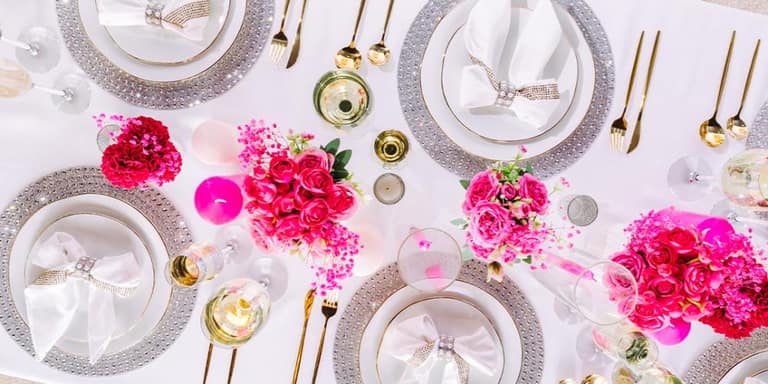
The history of napkin rings tells us they were always meant to be personal. That's still true. A ring that feels right for a holiday dinner might feel out of place at a casual weekend brunch, so it helps to think about occasion first.
Start with your napkin material. Cloth napkins in linen or cotton hold their shape well inside a ring, while thinner fabrics can slip through looser designs like the swirl style. Fold your napkin into a simple rectangle or loose roll before sliding it through the ring. This means the ring stays visible instead of getting buried in fabric.
Color coordination matters more than people expect. A gold-toned ring, such as the Ashford Napkin Ring Set, warms up a table with silver flatware or gold-rimmed glassware. Silver and charcoal tones do the opposite, cooling down a table full of warm wood or brass accents. Pairing your napkin ring with a coordinating placemat, like the Park Avenue Placemat, ties the whole setting together without much extra effort.
A napkin ring is one of the smallest items on the table, but it's often the last thing a guest notices before they sit down to eat.
NAPKIN RING TRADITIONS AROUND THE WORLD
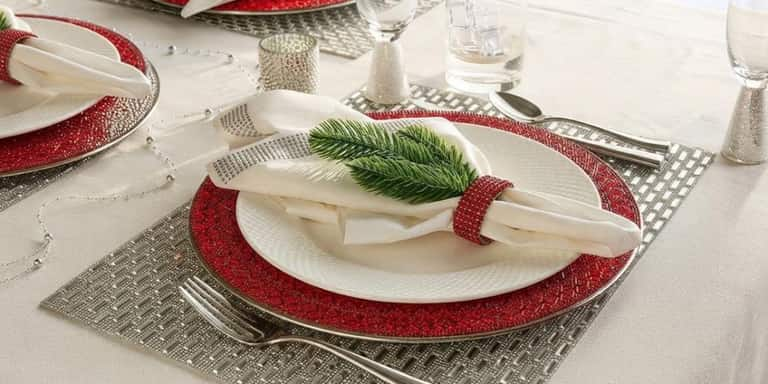
France gets credit for popularizing napkin rings, but other cultures developed their own versions of the same idea. In parts of Scandinavia, woven fabric bands served a similar identifying function. In the American South, monogrammed silver rings became wedding gifts, passed down as family heirlooms alongside china and silverware.
These regional variations share a common thread: napkin rings have always marked an occasion as worth a little extra care. Whether that care came from engraved silver or rhinestone detailing, the underlying instinct hasn't changed in over a hundred years.
QUICK NAPKIN RING STYLING CHECKLIST:
- Match metal tones to your flatware and glassware
- Choose a napkin fabric with enough body to hold its shape
- Coordinate with a placemat or charger for a cohesive look
- Save formal designs for holidays, bold designs for everyday
FREQUENTLY ASKED QUESTIONS ABOUT NAPKIN RINGS
Do napkin rings still serve a practical purpose today?
Yes, though the purpose has shifted. Instead of identifying an individual's napkin between washes, rings now keep folded napkins neat on the table and add a finishing touch to place settings. This means they've moved from function to intentional style, which is a natural evolution for a lot of tableware.
How many napkin rings should I own?
Most sets come in fours, which works well for everyday dinners. In your space, consider owning two sets in different styles, one classic and one bold, so you can match your table to the occasion without buying new pieces every season.
Napkin rings started as a simple household solution and became a lasting piece of table tradition. That's a rare thing for a decorative object to accomplish. Whether you lean toward a pearl-trimmed classic or a sculptural swirl design, you're taking part in a custom with real staying power, one place setting at a time.
Comments
Leave a Comment