
How to Create the Perfect Charcuterie Board and Wine Pairing for Entertaining
A charcuterie board can turn a casual get-together into an event people remember. The secret isn't extravagant ingredients. It's how thoughtfully you build the board, pair the wine, and style the table around it. In our experience, a handful of deliberate choices separate a spread that looks thrown together from one that feels effortlessly curated.
BUILDING A CHARCUTERIE BOARD THAT LOOKS AS GOOD AS IT TASTES
Successful boards begin with contrast, both in flavor and texture. You want soft and firm cheeses, at least one cured meat, something briny, and something sweet. Picture brie beside aged cheddar, prosciutto curled next to salami, and olives tucked against dried apricots or figs. This variety of textures keeps every bite genuinely interesting.
Arrangement matters just as much as the ingredients themselves. Group items in odd numbers, since clusters of three or five read more naturally to the eye than even pairs. Leave small gaps between groupings so fruit, nuts, or crackers can fill in as you build. This approach creates visual movement across the board instead of flat, predictable rows.
The surface beneath your ingredients establishes the tone before anyone takes a single bite. A large, reflective base gives the food a proper stage instead of letting it blend into the table. The Regent Round Charger works beautifully for this purpose, since its mirrored glass and crystal-filled edge catch ambient light and make even simple ingredients look deliberate.
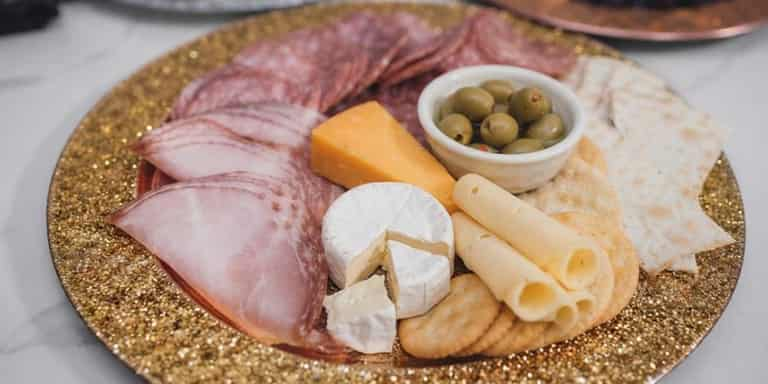
THE SECRET TO A BALANCED BOARD
Aim for roughly two ounces of meat and cheese per person, then build everything else around that foundation. This proportion keeps your board generously full without unnecessary waste, while still leaving ample room for the fruit, nuts, and crackers that make the presentation feel abundant.
PAIRING WINE WITH YOUR CHARCUTERIE SPREAD
You don't need formal training to pair wine with a charcuterie board. The simplest approach involves matching intensity between the food and the pour. Bold, salty meats like prosciutto or salami call for a medium-bodied red, something like Pinot Noir or a dry rosé. Soft, creamy cheeses fare better alongside a crisp white or something sparkling, since the acidity cuts effectively through the richness.
Hard, aged cheeses tend to be more forgiving companions. A nutty Gruyère or sharp cheddar pairs comfortably with both reds and whites, which makes it a dependable choice when you're serving a crowd with varied preferences.
FOR RICH, SALTY BITES
Reach for:
- Pinot Noir
- Grenache
- Light Chianti
FOR SOFT, CREAMY CHEESE
Reach for:
- Dry Champagne
- Sauvignon Blanc
- Prosecco
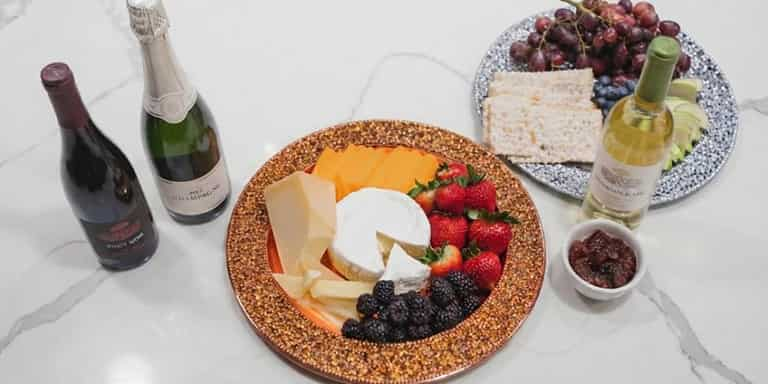
If you're serving both reds and whites, a decanter earns its place on the table. The Vetrina Decanter softens a young red's sharper edges while doubling as an elegant centerpiece, its crystal-filled handle adding a genuinely glamorous touch beside the board.
CHOOSING THE RIGHT SPARKLY WINE GLASSES FOR EVERY POUR
The glass you pour into transforms how the whole table feels, even though it doesn't alter the wine itself. A bowl that's too narrow crowds the aromas, while the wrong shape can make a delicate white taste unexpectedly flat. Reds generally want a wider bowl to let the wine breathe properly, while whites and sparkling wines perform better in a narrower glass that keeps them cool and lively.
For everyday entertaining, sparkly wine glasses with a touch of shimmer add polish without feeling excessive. The Prism Wine Glass Set features faceted, angular bowls with gold detailing that catch candlelight beautifully once evening settles in. Since it arrives as a set of six, it's practical for larger gatherings as well.
The right glass doesn't change how the wine tastes, but it changes how the whole table feels. That's half of what entertaining is about.
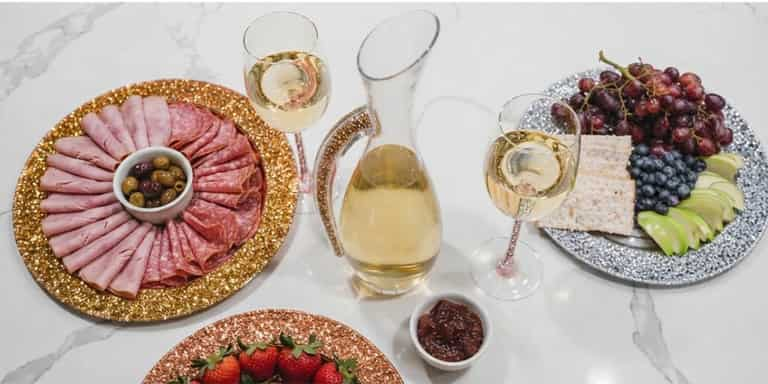
SETTING A TABLE THAT PULLS THE WHOLE SPREAD TOGETHER
Once the board and glassware are ready, the table setting ties the entire presentation together. A placemat beneath your charger defines the space and keeps the whole layout looking intentional rather than accidental. The Fifth Avenue Placemat works especially well here, offering a felt backing that protects the table and a pattern that coordinates easily with most glassware styles.
Small details finish the look with surprisingly little effort. Simply folded cloth napkins, a few flickering tealights, and coasters positioned near the wine service all add meaningful polish to the overall scene.
BEFORE GUESTS ARRIVE, CHECK FOR:
- Board arranged in odd-numbered groupings with a few gaps left for fruit and nuts
- Red wine breathing or decanted, whites chilled and ready to pour
- Glassware matched to the pour, wider bowls for reds and narrower ones for whites
- Placemats and napkins set before the board goes down
- A small bowl on hand for pits, shells, or toothpicks
None of this needs to be complicated. Once you've settled on your go-to pairings and a few favorite serving pieces, assembling a beautiful spread takes twenty minutes, not two hours. That's the underlying goal of entertaining well. The process should feel effortless for you and genuinely special for everyone gathered at the table.
Comments
Leave a Comment